The story
You already know Them.
Every company has one. This is the story of keeping their expertise, and the company we are building around it.
The team
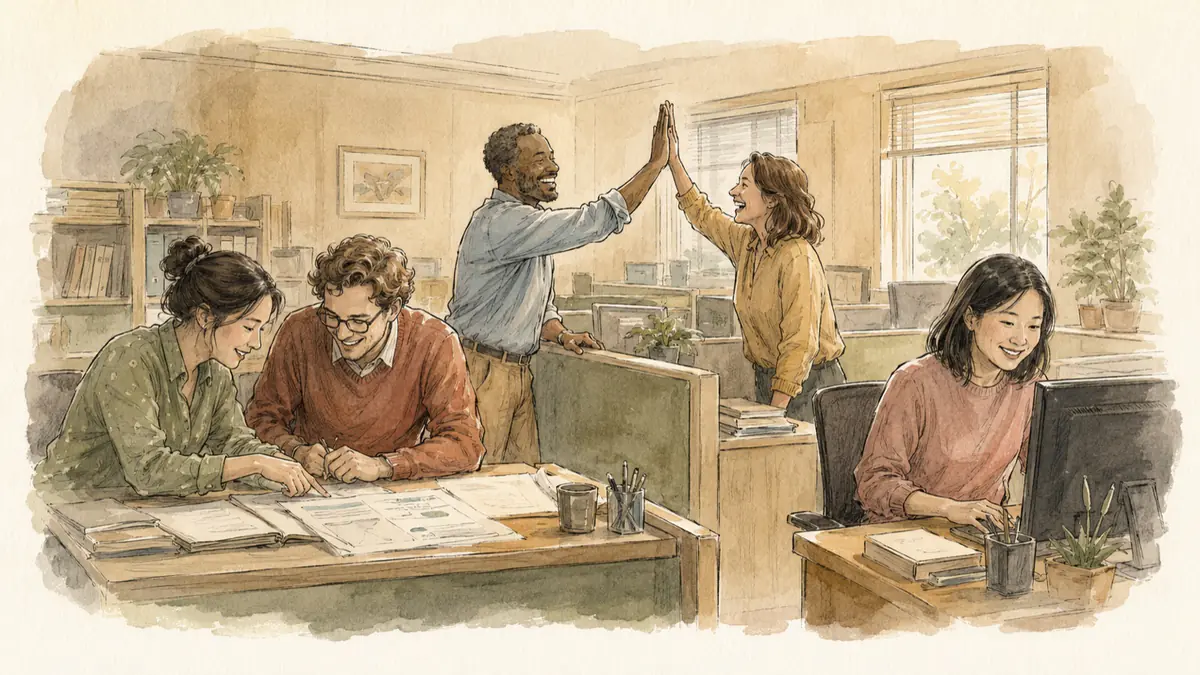
Once upon a time, there was a team full of people who were very good at what they did.
Each had learned things no handbook could teach: what to notice, when to adapt, and how to solve the problems no process had planned for.
The scattering
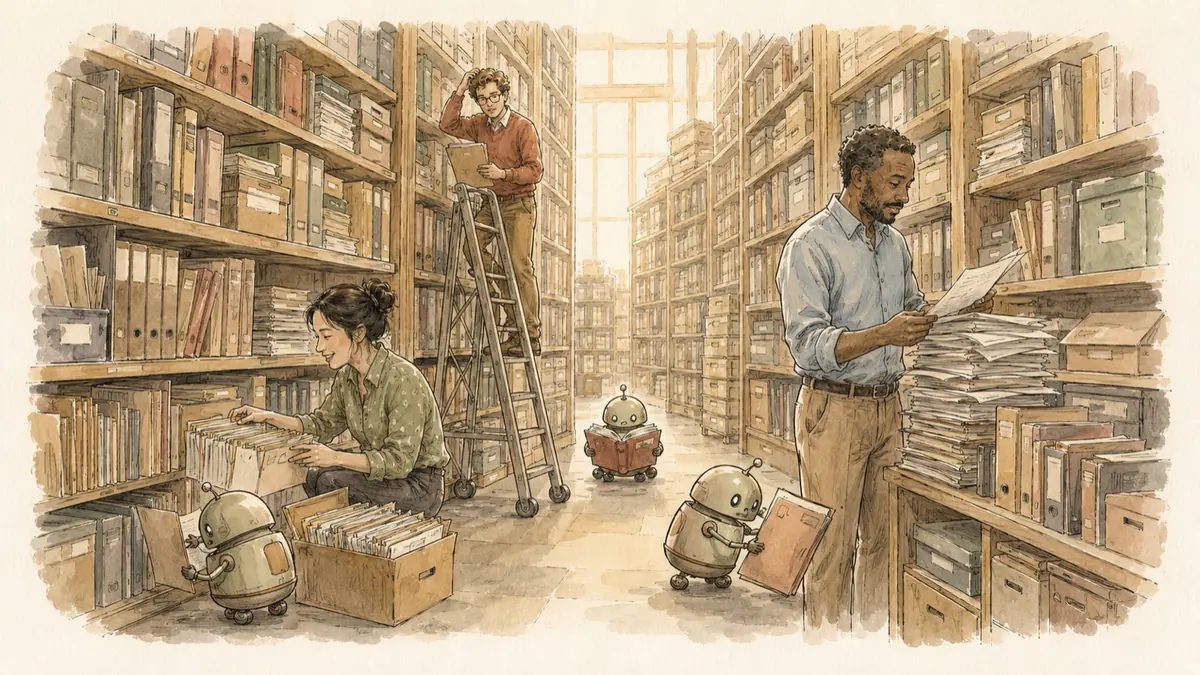
But their work lived in far too many places.
Conversations were in one tool, documents in another, and every AI assistant worked alone with only a small piece of the story.
The missing thinking
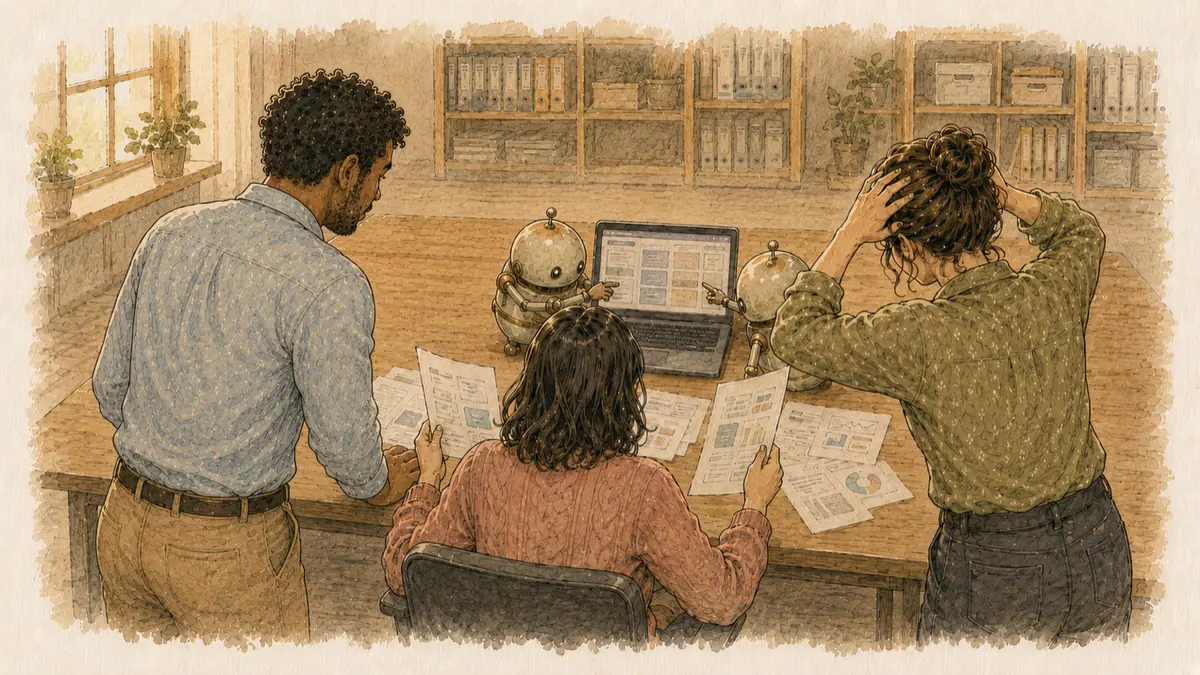
The files were easy to find. The thinking was not.
New teammates could see what the team had done, but still needed the experts to explain why it worked and what to do next.
A bright idea
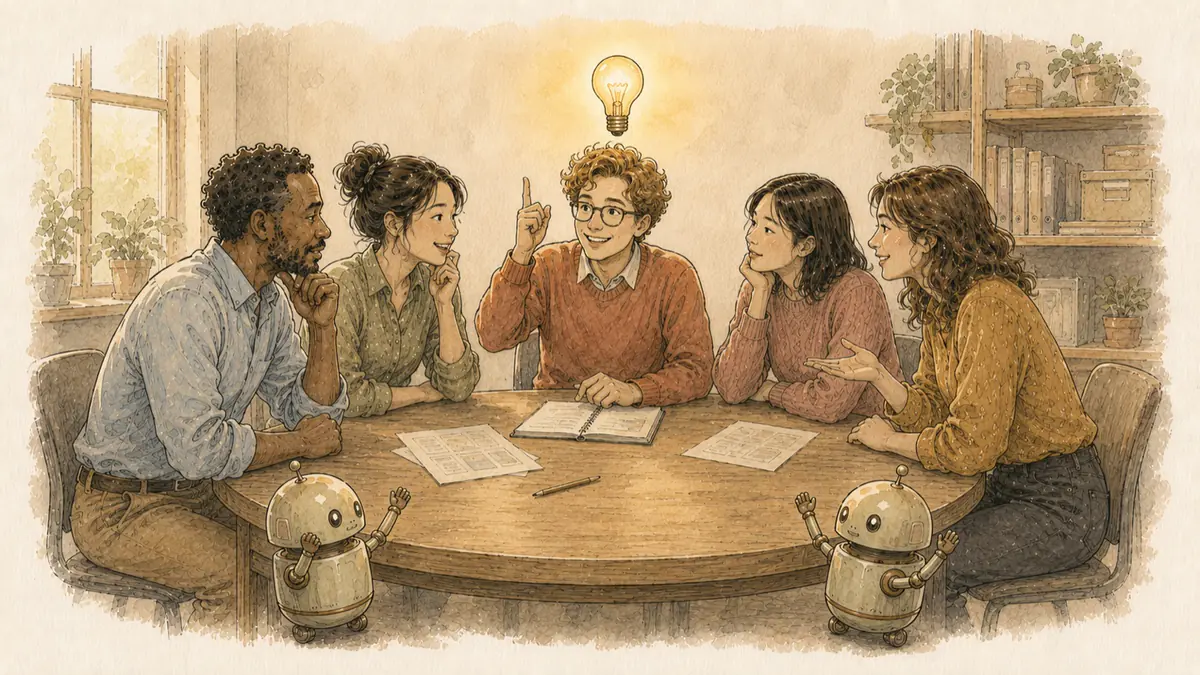
Then we had a bright idea.
What if people and AI teammates could work from shared context, while keeping the tools they already use? That idea became Them AI.
Together
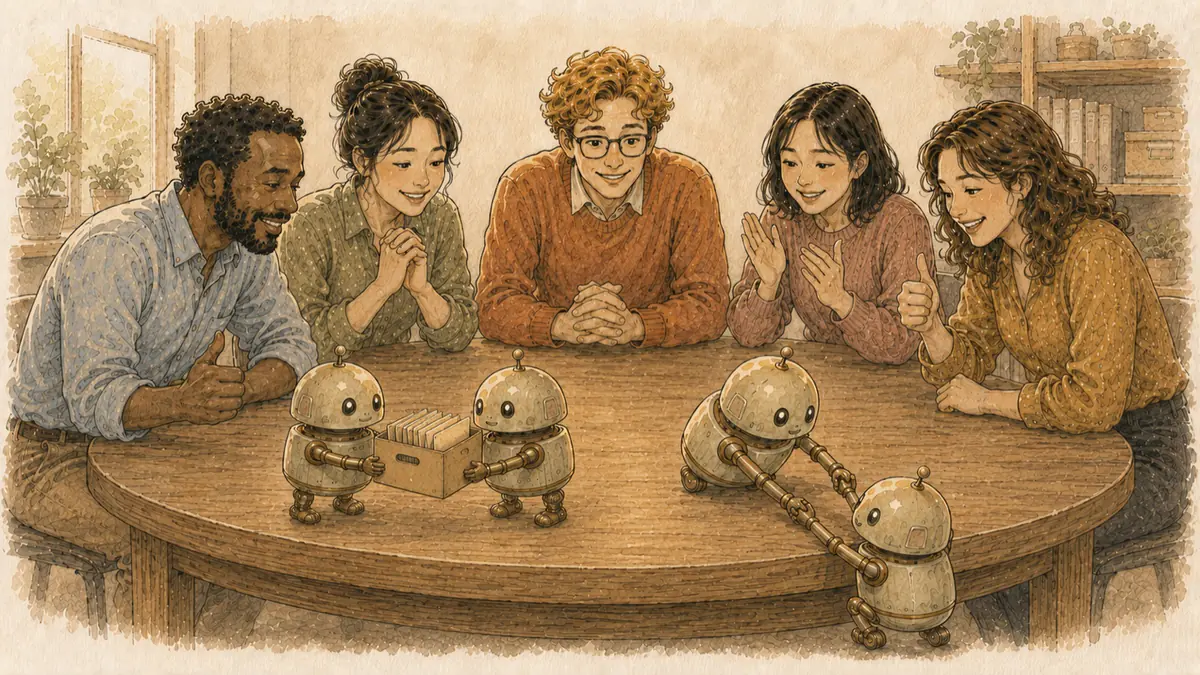
Now the agents could work together, too.
A room gave the team a place to keep the data, work through examples, and discuss the answer. People brought their judgment, explained corrections, and used those examples to teach their AI teammates.
The learning
One project's lessons could help the next.
A reviewed decision could become memory. The method behind it could become a skill. A teammate's training stayed with that teammate until the team reviewed a method for wider use.
The next chapter
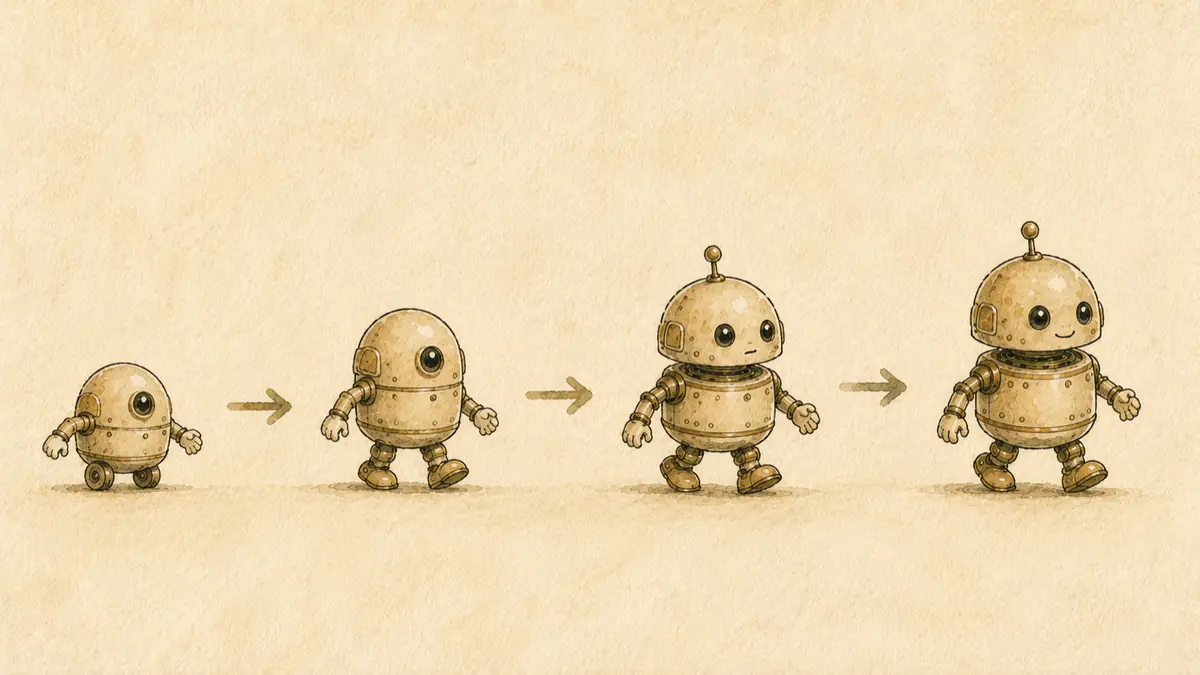
Work was always a team sport. Now the AI is on the team.
People brought judgment. AI teammates took on an outcome: they learned how the team had done the work, were tested on the team's past cases, and were measured by the same number the team was. Each reviewed lesson gave the next person or teammate a better place to start.

One memory
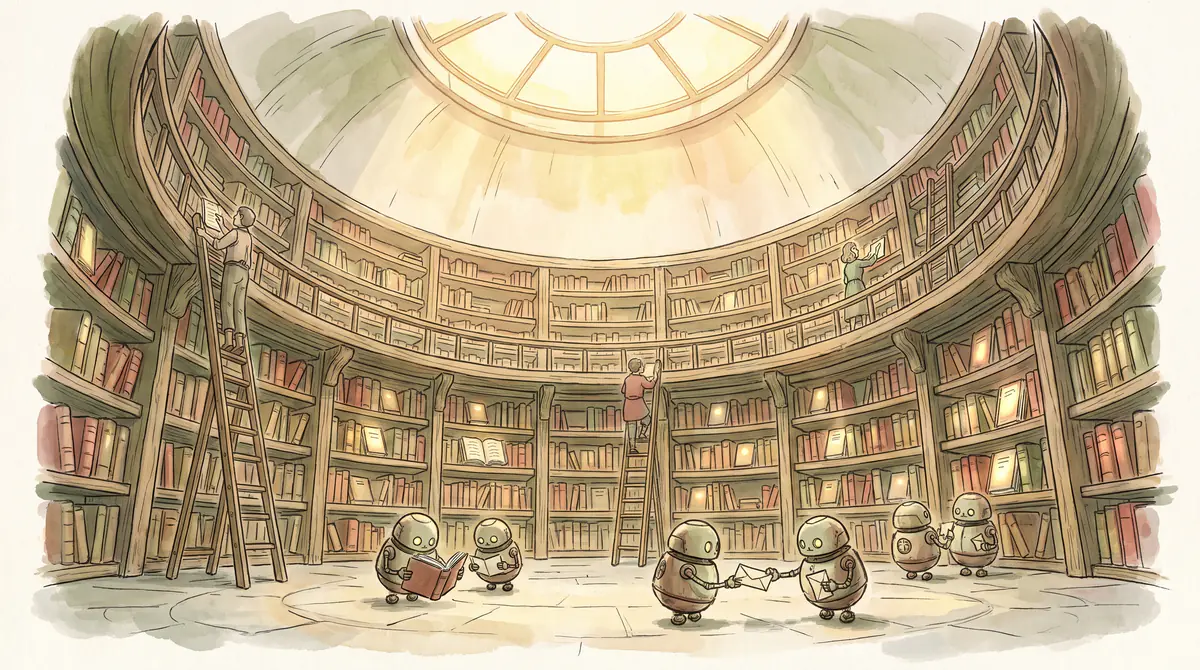
Keep the knowledge. Keep the reasons behind it.
People bring their experience. Agents bring their tools. Shared memory keeps the facts and decisions the team approves, with reusable skills alongside it.
Why we build
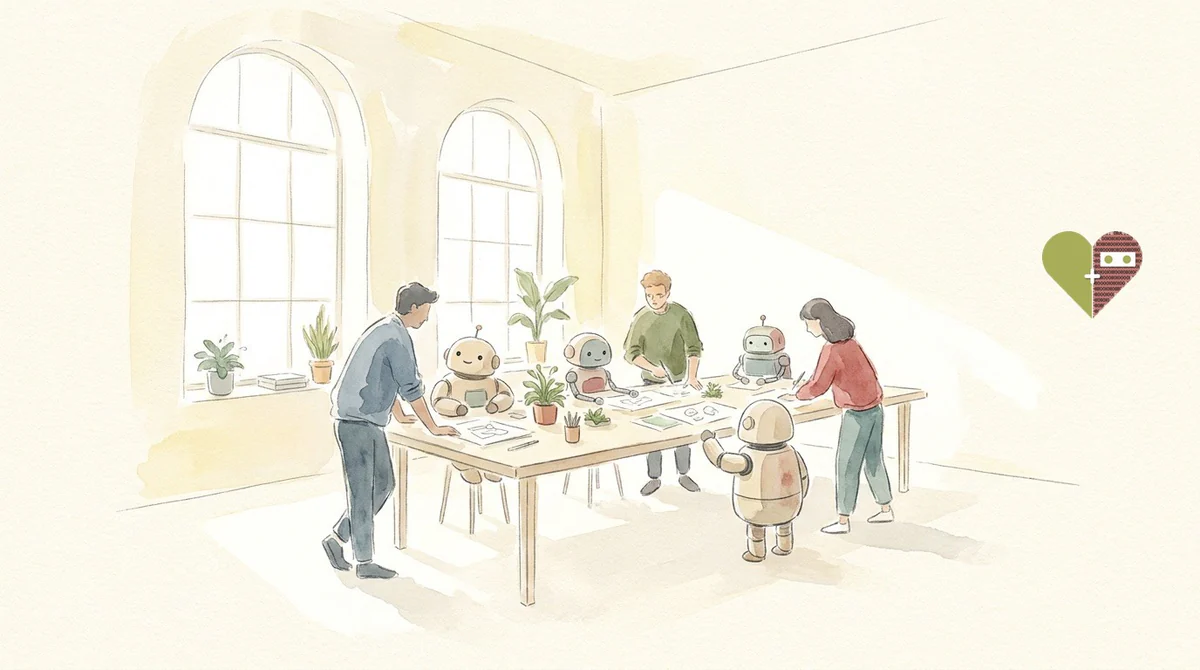
So what your best people know keeps working for everyone.
Every company runs on a few people who know why things are done the way they are. AI can now take on much of the work, but on its own it only knows the task in front of it.
We build Them AI so both work from the same memory. Your people teach it, check it and decide what the company keeps. Every AI teammate starts from there, and so does every new person who joins.
Memory is the start. An AI that only knows the task can finish the task. It cannot own an outcome. To own one, it has to learn how your people did the work, be tested against it, and be measured the way they are. That is what we are building next.
Less time explaining the same work twice. More time for the judgment and creation only people bring.

Your company
One memory in the middle. Your people and AI teammates around it.
Here is your company on Them AI in the current beta.
Its processes
the company's own · governed
Them AI
citedownedreviewed
ApproveReject
Human review before draft knowledge becomes approved memory
Its skills
the company's own · reviewable
Its people · past, present and future
AI teammates · built and trained here
External agents · connected through MCP
 Claude Codeconnected, via MCP
 Cursorconnected, via MCP
Its rooms
Its connectors
A room is open to everyone in the workspace unless it is members-only. Read the current access boundaries.
Each teammate carries its own job, training and reviewed skills.
Next, each AI teammate will also hold an outcome and the KPI that measures it.
The company keeps approved knowledge, with processes and skills beside it. People and AI teammates can build on that shared context. When someone leaves, the work your team has agreed to keep can still help.
What we believe
The hard part was never intelligence. It was memory you can check.
AI can draft the reply and prepare the brief in less time than it takes to find the file. What it cannot know on its own is which of your decisions still stand, and why.
Good work was never one person and a tool. One person knows the policy. Another knows why the team bent it once. Work goes right when both are heard, and AI belongs beside them, in plain view.
Today, work runs on asking around.
Picture a Tuesday. A renewal closes Friday, and the customer wants last year's discount. The account lead asks an AI assistant. It reads the discount policy and says no.
The policy is real. It is not the whole story. Last year Rosa approved an exception, for a good reason, in a thread nobody can find. Rosa left in March. The afternoon goes to asking around.
The assistant read the file. Nobody had decided what it was allowed to believe. More memory would not fix that. A model that keeps everything it was told is not a company that knows something.
Them AI is the intelligence your company owns.
People and AI teammates work together in rooms, on one company memory that your people approve and every answer that uses it cites. Search finds. Dashboards measure. Them governs.
Run that Tuesday again. Before Rosa left, her exception was approved as a decision, with its reason, its source and an owner.
The account lead opens a room for the renewal and asks the sales teammate, which runs with Priya, for a reply. Its draft cites the exception. Priya owns the discount policy, so she makes the call. Once her call is approved, it joins memory, and next year's renewal starts from it.
An answer is not an outcome.
That Tuesday went right, and it still began with someone asking. Your best people were never valued for answering questions. They were trusted with an outcome. Priya does not answer for one reply. She answers for the renewals: every one going out on terms the company approved.
So run that Tuesday once more, the way we are building Them AI to work. Priya gives the sales teammate the same outcome, and the KPI that measures it: renewals sent on approved terms. The teammate learns how she and the team handled past renewals, Rosa's exception among them. It is tested on those cases and scored against what the team did. Its number is compared with the team's.
Then nobody has to ask. The renewal date comes up, and the teammate starts the work: it drafts the reply, cites the exception and brings it to the room. Priya still makes the calls kept for a person.
This is where Them AI is going, not what the beta does today.
Six things we hold to.
You decide what stays.
New facts, decisions, and methods become shared company memory after a person approves them, with a source and an owner.
People move on. Their work can stay.
Keep the decisions, reasoning, and methods they documented, so the next person has something useful to build on.
You set the boundaries.
Choose where AI can work independently. Anything it sends outside the company waits for a person's approval.
Every AI teammate has an outcome.
Next, you will give each one an outcome, a KPI and a person to work with. See its activity while your private chats stay private.
One inbox for what needs you.
Review drafts, approve requests, and answer questions in one place. A teammate that doesn't need your attention stays quiet.
Bring the agents you use.
Build here or connect supported agents through MCP. Each works with the access and company knowledge you allow.
Lines we will not cross.
A few things we won't compromise on.
Shared knowledge needs a human check.
A document or AI answer can suggest something useful. Your people decide whether it becomes knowledge the company works from.
Your knowledge should travel with you.
Use approved memory with supported AI tools, and export skills as plain SKILL.md files. Keep using what your team has built as your tools change.
You choose your AI team.
Bring supported agents from the providers you prefer. Give each the access it needs and the boundaries you want.
The work belongs beside the conversation.
Keep tasks, files, drafts, and decisions in the room where people are working through them. Give the discussion somewhere to go.
Who it is for.
Does your best answer usually start with "Ask so-and-so"? Them AI is built for the person who answers for an outcome, and the team whose work depends on what the company already knows.
Support and customer success. Sales. Consulting and advisory. Operations.
If a few people hold the context everyone needs, or useful AI work stays in separate chats, bring that thinking into one memory your whole company owns.
We onboard teams in small groups, with a person helping each one get started.
The promise
The knowledge your people choose to share can keep helping the people who come next.
Them, together.
Governance
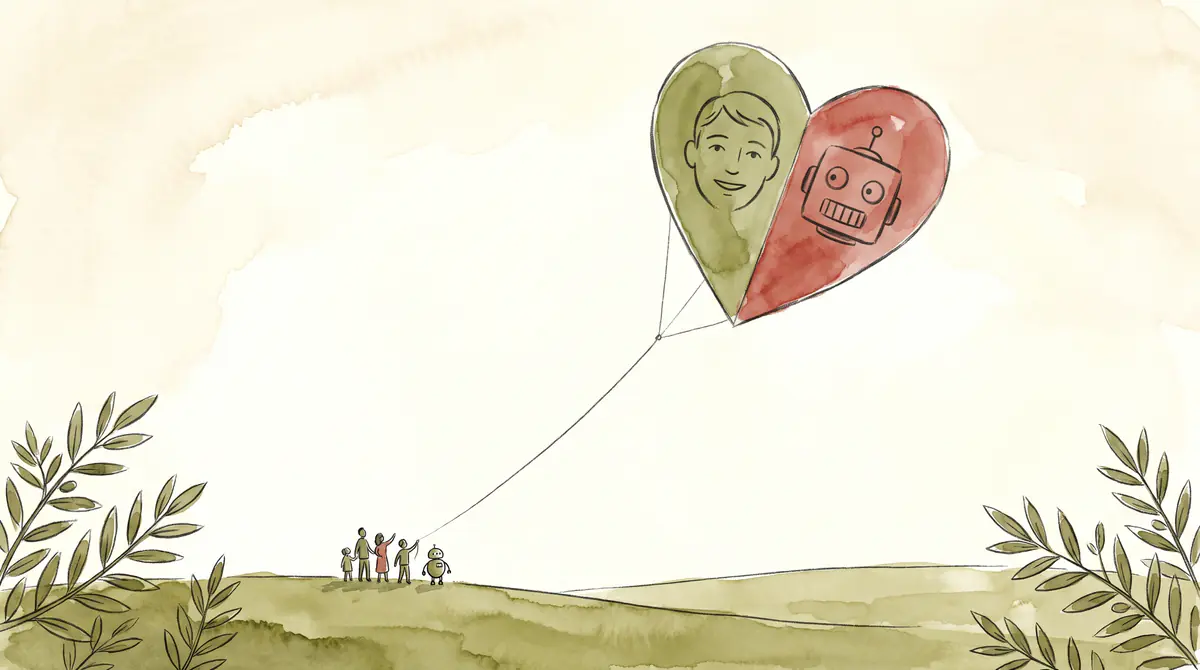
The AI drafts it. The human decides it. The memory compounds.
Bring context
Connect a supported source, upload a document, or supply a public page. Start with material your workspace members are authorized to see.
Prepare the knowledge
Turn source material into draft facts and decisions. Keep the supporting references and assign someone to review them.
Assist
Draft from approved context, then check the sources and reasoning. AI can still make mistakes.
Keep what holds up
A person with review permission approves the useful decision as memory. Repeatable methods can be reviewed separately as skills.
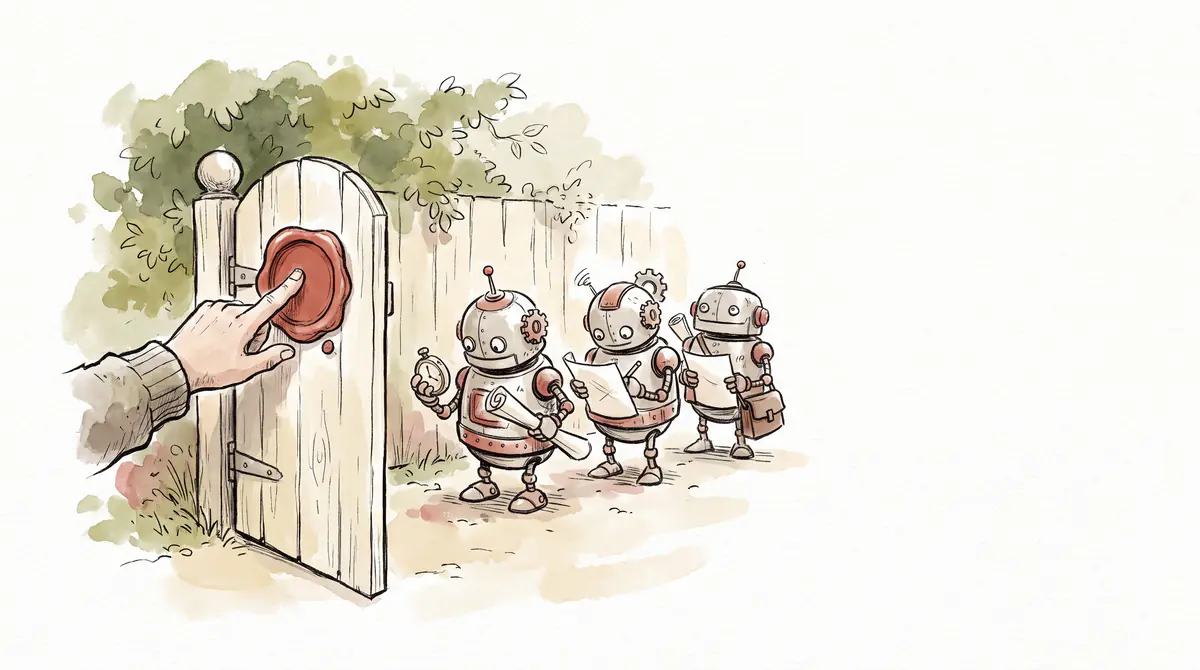
A policy says what is allowed. A decision with its evidence explains why the team applied it that way. Keep both, so the next person does not have to start from the file alone.
Individual expertise in.
Collective intelligence out.
Roadmap
Three acts, one brain.
What the current beta does, what we are exploring, and the longer-term ambition. Future ideas are not availability commitments. The details live in the FAQ.
Current invite-only beta: An AI team with shared context
Build shared context in rooms, work through examples together, and teach AI teammates with reviewed corrections. Keep useful facts as memory and repeatable methods as skills. Connect supported sources and give compatible external agents scoped MCP access. Rooms are open to the whole workspace or only to the people you add, and approved memory is open to everyone.
Product direction: AI teammates that own an outcome
Next, an AI teammate will own an outcome. You give it the outcome and the KPI that measures it, like every renewal going out on the terms you approved. It learns how your business works from the systems you connect and from how your people did the work before. It keeps its own notes, while company memory stays what your people approved. It is tested on your past cases and scored against what your people did, and each correction becomes one more test. People who build AI call these tests evals. It starts work when something changes, like a renewal date coming up, and its KPI is shown beside how your people did before it started. Through its first four weeks, a person decides each step. This is where the product is going, not part of the current beta.
The room does more of the work, too. A plain message in a room goes to the AI teammate whose job fits, and you see why: "Picked Riley: Discount policy v3". Tags still win. A teammate may ask one other teammate for help, under limits anyone in the room can stop, and anything that leaves the company waits for a person. Each AI teammate can sit on your desktop as a small Them, with Write and Call assist. Call assist keeps notes beside a call today, with a brief before it and a follow-up draft after it, and once everyone on the call knows, it can use the call's sound to suggest the right record as the conversation moves. Talk to Them takes a question out loud and can read the answer back. Room bridges to Slack and Microsoft Teams are planned. A marketplace of ready-made AI teammates and skills is free during the beta; buying, selling and tools are next. Automatic updates in outside tools are not part of the current beta, and Call assist keeps no recording.
North star: Earned trust
The first step is built: when an AI teammate's drafts keep going out unchanged, Them AI shows the evidence and offers to let it post in its room on its own, and a person decides. Nothing changes by itself. The long-term question is where a proven method could safely need less supervision. That requires explicit controls, clear accountability, and evidence it works, never a reason to skip human review.
People move on. Expertise should stay and evolve.
How to start
Got a team in mind? Bring them.
Join the waitlist with your business email.
Bringing your whole team? Email hello@usethem.ai with your team's size and what you work on. Teams joining together get priority.
Already know someone using Them AI? Ask them for an invite from their workspace.
Start with one team and one real piece of work. Plan a pilot
Available on Mac. Free during the invite-only beta.
Bringing a whole team, building with us or backing us: hello@usethem.ai