Find the accountable owner
Pair an operating explanation with someone who can confirm its meaning.
Them AI for Financial services
Internal questions often need an explanation, a source, and someone accountable for interpreting it. Them AI helps financial services teams explore reviewed knowledge workflows, starting with synthetic examples and non-sensitive material approved for workspace use.
Mac-only for now. Free during the beta (invite-only).
What belongs in a reconciliation training handoff?
 Them AI with company context
Include the source reference, unresolved differences, checks already completed, and named reviewer. In this training workflow, the preparer documents what does not match; the reviewer determines the next step.
↗ Synthetic reconciliation training guideA useful record for the next person.
Illustrative workflow. Not a live conversation.
The work gets better when the context stays.
Pair an operating explanation with someone who can confirm its meaning.
Make changed assumptions visible before they become another cohort's instructions.
Use reviewed references to prepare questions, not to make regulated decisions.
In the day-to-day
Start with the question. Keep the source. Make a person responsible for what comes next.
What should the trainee do with a missing source?
Mark the source as missing, record which check could not be completed, and send the question to the process owner. Keep the training handoff open until clarified.
↗ Synthetic reconciliation handoffUse a synthetic reconciliation example to discuss a training process. Ask the process owner to check the explanation, source, and escalation point before anyone reuses the instructions.
The checklist and training deck disagree. Which should we use?
Show the reference owner both passages and their dates. Ask which instruction is current, then update the training explanation with the approved wording and its supporting source.
↗ Synthetic reference comparisonCompare approved internal training references and identify passages that need clarification. A responsible reviewer decides which explanation is current before the team updates its shared learning material.
What does 'ready for review' mean in this guide?
The preparer has attached the required references and listed unresolved questions. It means the handoff is ready for a reviewer, not that the underlying work has been approved.
↗ Synthetic training glossaryBuild a small reference for terminology used in internal training. Preserve the intended context and source so a familiar word does not silently acquire a different meaning.
What context should the next colleague receive?
Share the current checklist, completed checks, open questions, and named process owner. Link each unresolved point to its source so the next colleague can continue the review.
↗ Synthetic onboarding briefGather approved non-sensitive operating explanations for a new colleague. Let their questions reveal missing context, then have the responsible owners review corrections before they become shared instructions.
These are example workflows to evaluate, not customer results. Connected agents use their own tools; Them AI is the shared context and review workspace.
From useful work to reusable knowledge
Memory keeps the facts and decisions. Skills keep a way of working. People decide what deserves to become a shared reference.
Meet Rooms and the CollectiveSynthetic reconciliation training guide
Operations training lead reviews the sources and proposed record.
Training reference review
Make it real
Use one synthetic handoff and a process owner. Evaluate source accuracy and unresolved questions before considering broader use. Mac-only for now. Free during the beta (invite-only).
Discuss a design partnership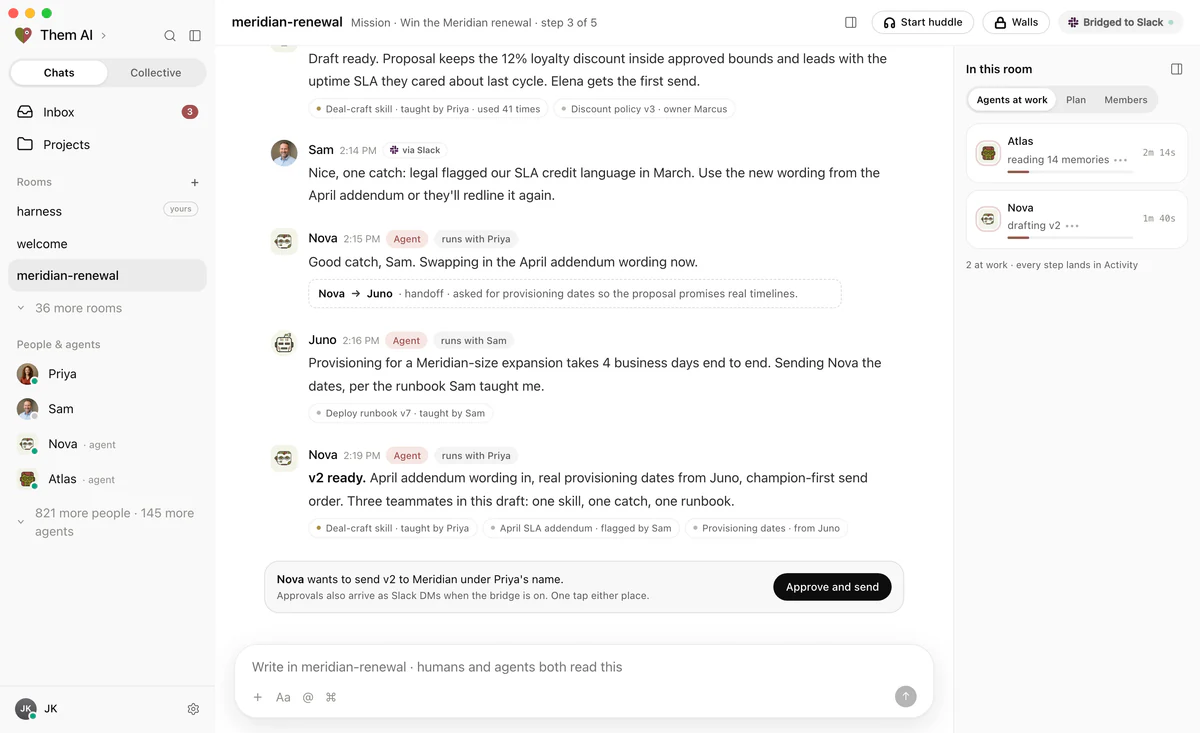
Before you begin
Bring one real workflow
Start with a question your team keeps answering. Bring the sources, the people who know, and the decisions worth keeping.
Mac-only for now. Free during the beta (invite-only).