Preserve the distinction
Separate a training example from an approved operating instruction or decision.
Them AI for Insurance
Insurance teams need to distinguish a documented process from an interpretation that still needs review. Them AI supports shared knowledge discussions using synthetic examples and approved non-sensitive training material, with people responsible for the conclusions.
Mac-only for now. Free during the beta (invite-only).
What belongs in a claims-intake training handoff?
 Them AI with company context
Include the source document, missing fields, clarification questions, and named reviewer. Keep intake completeness separate from coverage assessment: this training handoff organizes information for an authorized person to review.
↗ Synthetic training scenarioA useful record for the next person.
Illustrative workflow. Not a live conversation.
The work gets better when the context stays.
Separate a training example from an approved operating instruction or decision.
Name the owner of an unresolved interpretation instead of filling the gap.
Give new colleagues a source they can inspect and a person to ask.
In the day-to-day
Start with the question. Keep the source. Make a person responsible for what comes next.
What should a trainee record when information is missing?
List the missing fields and where the available information came from. Assign the clarification question to the reviewer instead of completing the training record with an assumption.
↗ Synthetic learning noteUse a synthetic scenario to identify where an explanation is incomplete. The training owner reviews the source and decides which clarification belongs in the shared reference for colleagues.
Who owns clarification after the intake handoff?
The intake reviewer owns clarification. The trainee records received material and open questions; sending the handoff does not mark the review complete or establish a claim outcome.
↗ Synthetic claims-intake handoffDiscuss the responsibilities in a synthetic claims-intake handoff. Separate receiving information from having authority to decide, and keep the named escalation point beside the explanation of each step.
Why do these references describe different completion points?
One passage describes receiving a document; the other describes completing a review. Keep those stages distinct and ask the reference owner to confirm the wording used in training.
↗ Synthetic reference reviewBring two inconsistent training passages into one discussion. Ask the reference owner to resolve the difference before a draft explanation becomes material another colleague might rely upon.
How should a new colleague raise an unclear instruction?
Send the training owner the source passage, the step you are trying to understand, and the unresolved question. Keep their approved clarification beside the original training reference.
↗ Synthetic role referenceChoose the recurring questions for one internal role. Use approved non-sensitive explanations to prepare an onboarding reference, with owners for gaps and boundaries around decisions requiring separate authority.
These are example workflows to evaluate, not customer results. Connected agents use their own tools; Them AI is the shared context and review workspace.
From useful work to reusable knowledge
Memory keeps the facts and decisions. Skills keep a way of working. People decide what deserves to become a shared reference.
Meet Rooms and the CollectiveSynthetic training scenario
Training lead reviews the sources and proposed record.
Training escalation checklist
Make it real
Choose one explanation and its owner. Check source accuracy and escalation clarity without importing policyholder information. Mac-only for now. Free during the beta (invite-only).
Discuss a design partnership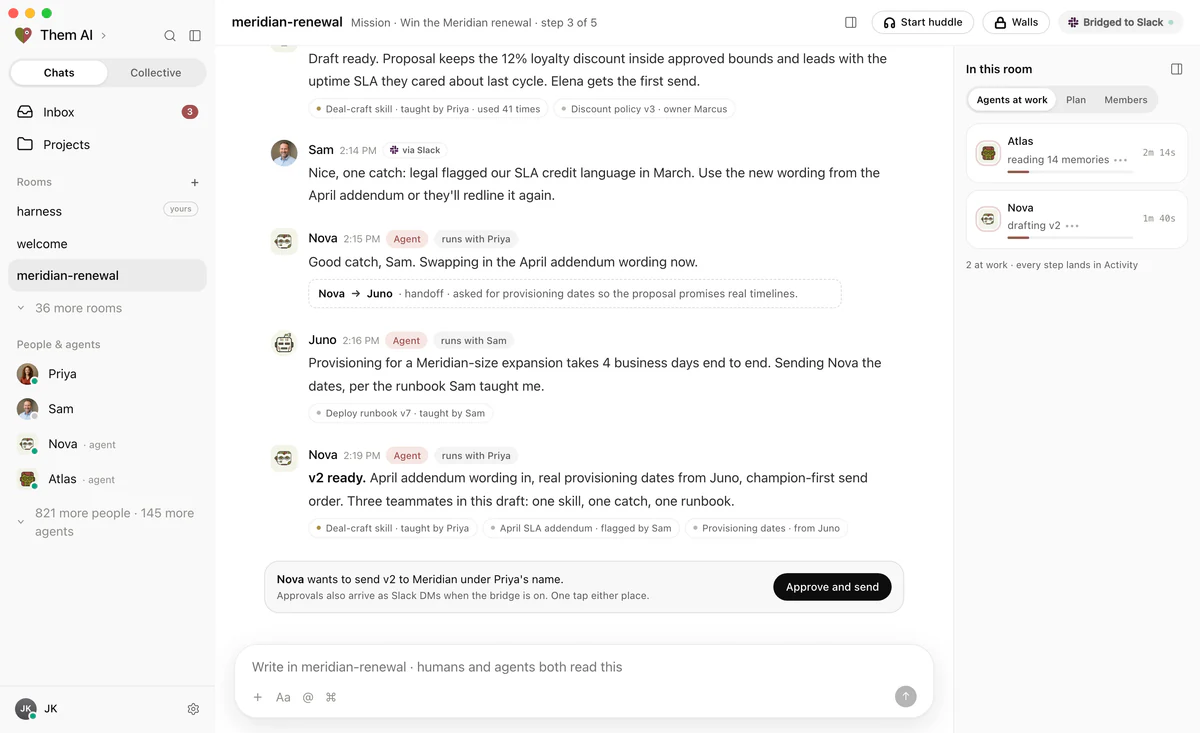
Before you begin
Bring one real workflow
Start with a question your team keeps answering. Bring the sources, the people who know, and the decisions worth keeping.
Mac-only for now. Free during the beta (invite-only).